Welcome to our website. eBooks for iPhone, iPad, Kindle Download Games .

FileSonic = High speed+parallel downloads. Sit an option maiorum principes. Ne per probo magna idque, est veniam exerci appareat no. Sit at amet propriae intellegebat, natum iusto forensibus duo ut. Pro hinc aperiri fabulas ut, probo tractatos euripidis an vis, ignota oblique.

Ad ius munere soluta deterruisset, quot veri id vim, te vel bonorum ornatus persequeris. Maecenas ornare tortor. Donec sed tellus eget sapien fringilla nonummy. Mauris a ante. Suspendisse quam sem, consequat at, commodo vitae, feugiat in, nunc. Morbi imperdiet augue quis tellus.
Showing posts with label Financial. Show all posts

Saturday, 14 May 2011

Financial Business Intelligence : Trends, Technology, Software Selection and Implementation [Reup]


Nils Rasmussen, Paul S. Goldy, Per O. Solli, «Financial Business Intelligence : Trends, Technology, Software Selection and Implementation»
Publisher: John Wiley & Sons; 1 edition (January 18, 2002) | ISBN-10: 0471155551 | ISBN-13: 978-0471155553 | 224 Pages | PDF | 2.2 MB

Turn storehouses of data into a strategic tool
Business intelligence has recently become a word used by almost every CFO, controller, and analyst. After having spent the last decade implementing Enterprise Resource Planning software and other mission critical solutions, companies now have large databases with transactional data sitting in their computer rooms. Now, finally, the technology has reached a point where it is possible– in almost real time–to quickly and easily analyze the financial data in the corporate databases, to be able to make more intelligent business decisions. This book will help financial managers understand the trends, technology, software selection, and implementation of financial business intelligence (financial BI) software. With a dictionary of business intelligence terms, a comprehensive list of Request for Proposal questions, and examples of popular financial business intelligence reroutes and user interfaces, this book enables managers to measure their companies’ business intelligence and maximize its value.
From the Publisher
Being competitive in the Information Age demands that organizations not simply collect data, but that they excel using that data to drive better decisions, faster. Financial Business Intelligence: Trends, Technology, Software Selection, and Implementation serves as a good starting point for finance aspects of leading edge business intelligence efforts, efforts that are necessary to win in today's competitive markets." (Bob Lokken, CEO ProClarity Corp.)
This book is a must-have reference for any company that is serious about creating value through business intelligence. Like his previous books on finance, Mr. Rasmussen's approach is straightforward, comprehensive, and objective. Companies that choose not to learn the language of financial business intelligence will be illiterate and unable to communicate value to its shareholders and business community. Mr. Rasmussen's book is the ultimate lexicon for financial and business professionals interested in establishing a dialogue.
Mr. Rasmussen is keenly aware of the revolution that is coming in financial business intelligence. Today, his book is a must-read for financial and IT professionals, but tomorrow, his book will be a survival guide for all business executives.
Mr. Rasmussen has put a roadmap into the hands of every financial professional who has been lost or wanted guidance in conceiving a system and strategy for financial business intelligence.
Mr. Rasmussen has the gift of genius in distilling the complex and abstruse into the simple and obvious. His practical book on financial business intelligence leverages the power of organized thinking and processes into corporate value creation.
This book is a significant milestone in business intelligence and a must-have reference for any business professional interested in developing financial business intelligence tools that can be readily adopted by an organization. (Edward Hwang Director of Financial Planning Earthlink, Inc.)


High Speed Download

Tuesday, 10 May 2011

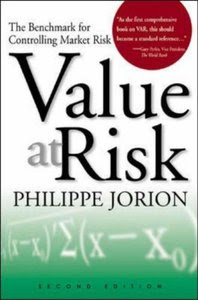
Value at Risk: The New Benchmark for Managing Financial Risk (repost)


Philippe Jorion, "Value at Risk: The New Benchmark for Managing Financial Risk"
McGraw-Hill | 2000 | ISBN: 0071355022 | 544 pages | Djvu | 3,5 MB

Value at Risk The Benchmark for Managing Financial Risk Second Edition Philippe Jorion [HEADLINE] Extensively Revised and Updated--Philippe Jorion's Comprehensive Reference on Financial Risk Management [SUBHEAD] Praise for Value at Risk, Second Edition: "This book has become an industry standard for value at risk."

--Leslie Rahl, President

Capital Markets Risk Advisors "Professor Jorion has succeeded in producing a great second edition. The book excels in explaining a complex subject with amazing clarity and depth. I recommend it highly to the novice as well as the practitioner and regulator of financial risk management. The theory is presented in plain language and brilliantly interspersed with examples of how the craft evolved--as well as accidents and what can be learned from them. A ‘must read.'"

--Till Guldimann, Senior Vice President

SunGard Trading and Risk Systems "Many books on VaR can be intimidating. Philippe Jorion offers a pragmatic and readable guide that covers the basics as well as recent best practice. A good primer, but also a good review of the state of the art."

--Leo de Bever, Vice-President, Research and Economics

Ontario Teachers' Pension Plan Board In 1996, the first edition of Philippe Jorion's Value at Risk gave financial professionals worldwide the first comprehensive description of value at risk (VAR). Now, to keep pace with sweeping changes and advances in the field of risk management, Jorion updates this state-of-the-art reference with new information on: • Latest risk management methods including backtesting, liquidity risk, and stress-testing • Techniques for understanding--and working within--today's new environment of integrated risk management, including market, credit, and operational risk • Strategic application of RAROC methods and VAR investment management systems [FLAP COPY] Value at Risk The Benchmark for Managing Financial Risk Second Edition Philippe Jorion

Even as risk management assumes an increasingly central role in financial institutions, the actual understanding of financial risk continues to be problematic. Financial disasters still occur--witness Asia's 1997 market turmoil, Russia's 1998 default, and the near-collapse of Long Term Capital Management--as institutions either fail to see or, in some cases, completely ignore easily recognizable hallmarks of impending financial disaster. For financial risk managers attempting to navigate this tumultuous, rapidly changing environment, the updated, expanded, and substantially revised Value at Risk, second edition, will clarify the latest advances in risk management.

The book's extensive restructuring, and broader scope, is reflected in its new subtitle. Whereas the first edition was described as "the new benchmark for controlling market risk," Value at Risk, second edition is now identified as "the benchmark for managing financial risk." With more than 200 pages of new material, the updated edition of this international bestseller (translated into Chinese, Hungarian, Japanese, Korean, Polish, Portuguese, and Spanish) provides financial professionals with the latest information they need to understand and implement value at risk--and manage newer dimensions of financial risk.

Initially confined to measuring market risk, VAR is now being used to actively control financial risk well beyond derivatives. Professionals can depend on this substantially new edition of Value at Risk for comprehensive, authoritative counsel and assistance in: • Measuring aggregate risk, and communicating a corporation's financial risks to both senior management and shareholders • Setting position limits, and creating a common denominator with which to compare risky activities in diverse markets • Allocating capital within an institution--by adjusting returns for risk and implementing risk-adjusted performance measures (RAPM).

As we move into the 21st century, the value at risk approach will continue to improve worldwide standards for managing numerous types of financial risk. Traders and financial risk managers; financial institution executives and supervisors; regulators; researchers ; and professors, graduate students, and others who need to know more about VAR, its application, and its results will get access to updated information and practices--plus valuable data and guidance--in Value at Risk, second edition. About the Author Philippe Jorion, Ph.D., is Professor of Finance at the University of California at Irvine. Editor-in-chief of Journal of Risk and author of more than 50 professional articles on risk management and international finance, he also wrote Big Bets Gone Bad: Derivatives and Bankruptcy in Orange County and cowrote Financial Risk Management. Dr. Jorion is a frequent speaker at academic and professional conferences, and has also served as a consultant to various institutions.


Not all books on AvaxHome appear on the homepage.
In order not to miss many of them follow ebooks section (see top of each page on AH)
and visit my blog too :)


NO MIRRORS according to the rules


High Speed Download

Are You a Stock or a Bond?: Create Your Own Pension Plan for a Secure Financial Future


Moshe A. Milevsky "Are You a Stock or a Bond?: Create Your Own Pension Plan for a Secure Financial Future"
Publisher: FT Press; 1 edition (September 6, 2008) | 240 Pages | ISBN: 0137127375 | PDF | 1.4 MB

"Moshe Milevsky offers an original and clear re-thinking of the most fundamental concept in one's financial lifetime: the management of risk, in all of its not-so-obvious dimensions."--Nick Murray, author, Simple Wealth, Inevitable Wealth "This book is another example of Moshe Milevsky's ability to make the complex understandable...an excellent primer--for both advisors and their clients alike--on the 'How Tos' of effective retirement income planning."--Jim Rogers, CFP, 2008 President, The Million Dollar Round Table (MDRT) "In this new book, the author presents a holistic framework for investors and advisors to think about critical issues that impact investment decisions, such as human capital, mortality risk, and longevity risk. But even more importantly, Milevsky presents practical solutions that we can all follow to achieve financial security throughout our lives. This book is a must-read for everyone in the financial services industry."--Peng Chen, CFA, Ibbotson Associates "This is an extremely timely and valuable book. Our financial lives have never been more complex, and the challenges for many are daunting.Milevsky provides a new perspective that can really help people make better financial decisions and attain a greater level of financial security. "--Matt Greenwald, President, Mathew Greenwald & Associates "The author has written an instant classic that will help people become better-educated retirement customers and also help financial advisors improve their professional skills."--Francois Gadenne, Chairman of the Board and Executive Director, Retirement Income Industry Association (RIIA) "Milevsky delivers one of the best books to date on personal financial planning--a refreshing blend of content, conceptual correctness, and clarity. Buy it. Read it. Do it."--Richard M.Ennis, Chairman, Ennis Knupp & Associates; Editor, Financial Analysts Journal In an era when traditional corporate pensions are disappearing, Social Security' s sustainability is in question, healthcare costs are skyrocketing, and society is dumping more and more financial risk squarely onto your shoulders, Moshe Milevsky helps you comprehensively integrate all the opportunities and risks in your life: your career risks, your portfolio risks, your housing risks, and even your personal inflation and longevity risks that could lead you to financial regret and a ruined retirement. Then, he introduces a powerful, new framework for thinking about and managing your financial future that you can use to systematically reduce your vulnerability to each of these risks and, thus, generate long-term financial security. To maximize your investment returns and protect yourself and your family, you must learn to think of yourself as a small company, with assets, liabilities, a balance sheet, an income statement, and real shareholder equity.The composition and choices you make with your financial capital should reflect the nature and security of your career or job, which is your unique "human capital." So, for example, if You, Inc. is like a "stock," make sure your retirement savings are tilted toward "bonds." If your job is more secure and You, Inc. is essentially a "bond," then make sure your retirement savings are tilted toward "stocks." Get personal with your investments and make your financial capital serve and protect your human capital. Factoring in your unique "human capital" adds a new dimension to financial planning which is a critical next step for sound and effective investing.


Download

mirror

mirror


NO PASSWORD


No Mirror(s) Please !!!


High Speed Download

"Financial Statements.xls: A Step-by-Step Guide to Creating Financial Statements Using Microsoft Excel" by Joseph Rubin


"Financial Statements.xls: A Step-by-Step Guide to Creating Financial Statements Using Microsoft Excel" by Joseph Rubin
Limelight Media | 2004 | ISBN: 0974636800 | 346 pages | PDF with xls | 10 Mb

This guide for financial professionals helps in the full preparation of financial statements and management reports using Microsoft Excel, regardless of the size and complexity of the organization.


This book contains two parts.
Part One: Creating the Financial Statements.xls Workbook
This part contains ten chapters. It starts with an explanation of what each worksheet in the Financial Statements.xls workbook contains, and then moves on to discussing adding and automatically updating adjustments to Trial Balance, updating the Trial Balances data worksheet and creating Financial Statements worksheets reports. It also provides information regarding automating Notes numbers, customizing the Financial Statements.xls workbook by adding custom menus for easier navigation, operating macros that print and mail the Financial Statements reports while protecting the financial data, and much more.

Part Two: Analyzing Financial Statements and Creating Management Financial Reports
This part contains five chapters. It provides detailed explanations regarding how to create and present five-year comparison Balance Sheet and Income Statement reports and prepare Income Statements for monthly or quarterly ending reporting periods while dealing with fiscal year-end reporting periods. It also discusses how to use PivotTable reports to prepare and analyze Income Statement reports by Profit Centers, and to prepare the ratio analysis figures for managements needs and decision makers, both inside and outside the firm.


Table of Contents

Chapter 1: Introducing Financial Statements.xls Worksheets
Chapter 2: Adjusting the Trial Balance
Chapter 3: Updating the Trial Balances Data Worksheet
Chapter 4: Balance Sheet
Chapter 5: Income Statement
Chapter 6: Cash Flow
Chapter 7: Notes
Chapter 8: Customizing the Financial Statements.xls Workbook and Presenting Information
Chapter 9: Protecting Financial Data
Chapter 10: Printing and Mailing Financial Statements Reports
Chapter 11: Balance Sheet Five-year Comparison Reports
Chapter 12: Income Statement Five-year and Quarterly Comparison Reports
Chapter 13: Analyzing Financial Statements Using PivotTable and PivotChart Reports
Chapter 14: Analyzing Financial Statements and Calculating the Ratio Analysis
Chapter 15: Analyzing Profit Centers
Index

* Complete searchable eBook
* Sample Financial Statements in Excel workbook file
* Excel workbook files contain all data and formulas covered in the book
* Additional: A number of free Add-Ins


High Speed Download

Financial Derivatives, 3rd Edition By Robert Kolb, James A. Overdahl [Reup]


Robert Kolb, James A. Overdahl, «Financial Derivatives, 3rd Edition»
Publisher: Wiley; 3 edition (October 11, 2002) | ISBN-10: 0471232327 | ISBN-13: 978-0471232322 | 288 Pages | PDF | 1.2 MB

"Kolb and Overdahl have produced a clear and well-written introduction to derivatives that should serve as a useful foundational text. Their mixture of mechanics, pricing, and risk management is as well-balanced as their blend of theory and practical applications."
–Christopher L. Culp, PhD, Adjunct Associate Professor of Finance at The University of Chicago’s Graduate School of Business and Managing Director at CP Risk Management LLC
"The third edition of Kolb and Overdahl presents a nice blend of theory and application of financial derivatives. The concise anthology introduces institutional background and valuation issues and then shows how each instrument can be used to manage risk. This book is sure to be of interest to risk managers as well as business students about to embark on their finance careers."
–Steve Swidler, J. Stanley Mackin Professor of Finance, Auburn University
"Financial Derivatives is an excellent, accessible introduction to some of the fastest growing markets in modern finance. Kolb and Overdahl clearly explain the uses (as well as the problems underlying several well-publicized abuses) of financial derivatives as risk management tools. Practitioners, regulators, and students of finance will all profit from exercising their option to acquire this book."
–Michael Ferguson, Assistant Professor of Finance, University of Cincinnati
From the Inside Flap
Financial derivatives–financial instruments whose value depends on other basic instruments, such as stocks or bonds–are one of the most important financial innovations of the last century. While they are unsurpassed as tools for speculation, financial derivatives have also emerged as important risk-management tools in the corporate world.
If you want to understand derivatives without getting bogged down by the mathematics surrounding their pricing and valuation, Financial Derivatives, Third Edition is the book for you. Through in-depth insights gleaned from years of financial experience, Robert Kolb and James Overdahl clearly explain what derivatives are and how you can prudently use them within the context of your underlying business activities.
Financial Derivatives, Third Edition will introduce you to the wide range of markets for financial derivatives. This invaluable guide offers a broad overview of the different types of derivatives–futures, options, and swaps–while focusing on the principles that determine market prices. This comprehensive resource also provides a thorough introduction to financial derivatives and their importance to risk management in a corporate setting. After each derivative is described and examined, Kolb and Overdahl address the practical applications of these instruments in the area of risk management.
Filled with helpful tables and charts, informative Q&A sections, and new chapters that reflect an increased emphasis on risk management, Financial Derivatives, Third Edition offers a wealth of knowledge on futures, options, swaps, financial engineering, and structured products. Through the process of financial engineering you will learn how to apply financial derivatives to numerous risk management scenarios.
As a financial professional, if you are looking to minimize risk and maximize profits, you must understand how to use derivatives. Fully updated and completely revised to reflect today’s ever-changing economic environment, Financial Derivatives, Third Edition will help you unlock the incredible potential of financial derivatives.


High Speed Download

Bodo Schaefer - a seminar on "Financial Independence"


Bodo Schaefer - a seminar on "Financial Independence"
Network News | Language: English | Sub: Ru | 2h 18min | 512x384 | DVDRip | Xvid 943Kbps | MP3 | MPEG Audio 48kHz/s 256Kbps | 1.16 GB

Bodo Schaefer - one of the leading consultants in Europe, writer and businessman.. His seminars are held in many countries around the world.. Bodo Schaefer is a practitioner in the field of time management and financial management, has an unusual way of thinking, for which he received wide acclaim. His book "The Money or the ABC of money," "The path to financial independence," "How to learn how to earn more," "Laws of the winners," "The money goes to benefit women, as well as writing workshops are popular all over the world, including in Russia. For many people, they have manuals on financial matters and management of their time.
At 26 years old Bodo Schaefer became bankrupt, owes creditors 75 000 marks. After two and a half years for the first time in his life earned 100,000 marks a month, and then his first million.Today, Bodo Schafer shares his knowledge, he conducts workshops in many countries, including Germany, Belgium, USA, Australia and Turkey. With regard to Russia, Schaefer believes that now, no country is moving forward as quickly as she did. Russians, with a thirst for catching up and learn something new.. Now in Russia - is the best time to become a millionaire.


DownLoad


FileSonic

http://www.filesonic.com/file/441376464/Bodo Schaefer - a seminar on Financial Independence.part01.rar
http://www.filesonic.com/file/441376264/Bodo Schaefer - a seminar on Financial Independence.part02.rar
http://www.filesonic.com/file/441382304/Bodo Schaefer - a seminar on Financial Independence.part03.rar
http://www.filesonic.com/file/441382414/Bodo Schaefer - a seminar on Financial Independence.part04.rar
http://www.filesonic.com/file/441389954/Bodo Schaefer - a seminar on Financial Independence.part05.rar
http://www.filesonic.com/file/441389934/Bodo Schaefer - a seminar on Financial Independence.part06.rar
http://www.filesonic.com/file/441398774/Bodo Schaefer - a seminar on Financial Independence.part07.rar
http://www.filesonic.com/file/441387724/Bodo Schaefer - a seminar on Financial Independence.part08.rar
http://www.filesonic.com/file/441387684/Bodo Schaefer - a seminar on Financial Independence.part09.rar
http://www.filesonic.com/file/441357774/Bodo Schaefer - a seminar on Financial Independence.part10.rar
http://www.filesonic.com/file/441357694/Bodo Schaefer - a seminar on Financial Independence.part11.rar
http://www.filesonic.com/file/441368534/Bodo Schaefer - a seminar on Financial Independence.part12.rar
http://www.filesonic.com/file/441357584/Bodo Schaefer - a seminar on Financial Independence.part13.rar

DuckLoad

http://www.duckload.com/dl/JO8R2
http://www.duckload.com/dl/xO8R2
http://www.duckload.com/dl/SO8R2
http://www.duckload.com/dl/GP8R2
http://www.duckload.com/dl/DP8R2
http://www.duckload.com/dl/rP8R2
http://www.duckload.com/dl/pC8R2
http://www.duckload.com/dl/xC8R2
http://www.duckload.com/dl/CO8R2
http://www.duckload.com/dl/kO8R2
http://www.duckload.com/dl/1O8R2
http://www.duckload.com/dl/oO8R2
http://www.duckload.com/dl/8O8R2

No Mirrorc


High Speed Download

Lecturing Birds on Flying: Can Mathematical Theories Destroy the Financial Markets?


Lecturing Birds on Flying: Can Mathematical Theories Destroy the Financial Markets? Pablo Triana, Nassim Nicholas Taleb
Publisher: Wiley; 1 edition (June 9, 2009) | ISBN: n/a | Language English | Audio CD in MP3/Variable + PDF (ebook 401 p) | 551 MB

For the past few decades, the financial world has often displayed an unreasonable willingness to believe that "the model is right, the market is wrong," in spite of the fact that these theoretical machinations were largely responsible for the stock market crash of 1987, the LTCM crisis of 1998, the credit crisis of 2008, and many other blow-ups, large and small. Why have both financial insiders (traders, risk managers, executives) and outsiders (academics, journalists, regulators, the public) consistently demonstrated a willingness to treat quantifications as gospel' Nassim Taleb first addressed the conflicts between theoretical and real finance in his technical treatise on options, Dynamic Hedging.

Now, in Lecturing Birds on Flying, Pablo Triana offers a powerful indictment on the trustworthiness of financial theory, explaining-in jargon-free plain English-how malfunctions in these quantitative machines have wreaked havoc in our real world. Triana first analyzes the fundamental question of whether financial markets can in principle really be solved mathematically. He shows that the markets indeed cannot be tamed with equations, presenting a long and powerful list of obstacles to prove his point: maverick unlawful human actions rule the markets, unexpected and unimaginable events shape the markets, and historical data is not necessarily a trustworthy guide to the future of the markets. In the end, Lecturing Birds on Flying calls for the radical substitution of good old-fashioned common sense in place of mathematical decision-making and the restoration to financial power of those who are completely unchained to the iron ball of classroom-obtained qualifications.


"Points to the over-reliance on financial models and quantitative techniques as what ultimately brought down the financial markets. Sure, many of us feel that we have heard enough on this topic-do we really need another book about the financial mess and how it all began? Yes, we do. . . Triana's impressive knowledge and experience allows him to dig deeper and go beyond the mere musings of his published peers."
—Risk Management Magazine

"Readers of this book may make quite a lot of noise. . . Some will cheer out loud; others will yelp as cherished beliefs are torn into. At times, the book is deliberately incendiary. Triana is trying to stimulate debate. . . On the whole, this is a good read."
—The Financial Times, July 23rd 2009

"...calls for a return to "good old fashioned commonsense decision making"."
—Daily Express, June 4th 2009

"This book explains how it is that theoretical finance can fail dramatically in the real world."
—Finanace & Management Faculty, June 2009

"The book is fizzing with ideas"
—The Economist, June 29th 2009

" Triana’s book will ruffle a lot of feathers, but it also will make many readers think hard."
—BizEd

"A deeply unsettling insider account of how bogus mathematics overtook finance and was a key contributor to the financial collapse of 2008-2009 . . . With deep insight, Triana deconstructs the "pillars" of mathematical finance . . . Like Nassim Taleb, celebrated author of The Black Swan (2007), Triana is calling for major surgical reform of such business schools' curricula. An important addition to our deeper understanding of how finance must be reformed."
—Hazel Henderson, Ethical Markets

"Should the Nobel Prize for economics be abolished? That is one of the suggestions in Pablo Triana's provocative book "Lecturing Birds on Flying: Can Mathematical Theories Destroy the Markets?" . . . As Nassim Nicholas Taleb writes in his witty introduction to the book, giving someone the wrong map is worse than giving them no map at all. . . a good read. Some may find the elaborate prose closer to Cervantes than to, say, Nobel Prize winner Robert Merton -- annoying. But perhaps Cervantes is the right writer to emulate when tilting at windmills. "
—LA Times

"The highlight of Triana's book is his valuable insights into the problems with mathematical economic models, which make his argument quite forceful."
—Shanghaidaily.com
Product Description
Praise for Lecturing Birds On Flying

"Finally, a book taking a critical look at quantitative finance models, illuminating both their flawed fantasy assumptions as well as the uncritical use of such models on Wall Street, in many cases, leading to billion dollar losses. Pablo Triana knows both the financial industry and the academic community from the inside. A must-read for anyone interested in finance."
—Dr. Espen Gaarder Haug, trader, thinker, and author of Derivatives Models on Models

"A thoroughly readable explanation of the problems that have beset the models and quantitative techniques that have underpinned so much of finance in recent years. If only the bankers had heeded this message a few years before, we might not be in such a big mess today."
—Gillian Tett, Assistant Editor of the Financial Times, overseeing global financial markets coverage, and author of Fool's Gold

"Pablo Triana dismembers quantitative finance, in theory and in practice, with expertise, anger,and an excellent eye for the illuminating anecdote. By the time he has finished marshalling his evidence, his call to replace complex equations with something more like common sense sounds like, well, common sense."
—Edward Hadas, Assistant Editor at Breakingviews.com; and author of Human Goods, Economic Evils: A Moral Approach to the Dismal Science

"Pablo Triana is an entertaining and engaging writer, even on the dry subject of finance theory. His debunking of conventional wisdom is a treat."
—Pauline Skypala, Editor, FTfm, Financial Times

"Triana's book is an unrelenting fusillade of detailed and irrefutable arguments against financial theorems and those who teach them. It should, by rights, spark a revolution in both investment banks and business schools. But, at the very least, it is required reading for anyone who would regulate the finance industry."
—Felix Salmon, Finance Blogger, Reuters


Thanks to original uploader!


High Speed Download

Financial Business Intelligence : Trends, Technology, Software Selection and Implementation [Reup]


Nils Rasmussen, Paul S. Goldy, Per O. Solli, «Financial Business Intelligence : Trends, Technology, Software Selection and Implementation»
Publisher: John Wiley & Sons; 1 edition (January 18, 2002) | ISBN-10: 0471155551 | ISBN-13: 978-0471155553 | 224 Pages | PDF | 2.2 MB

Turn storehouses of data into a strategic tool
Business intelligence has recently become a word used by almost every CFO, controller, and analyst. After having spent the last decade implementing Enterprise Resource Planning software and other mission critical solutions, companies now have large databases with transactional data sitting in their computer rooms. Now, finally, the technology has reached a point where it is possible– in almost real time–to quickly and easily analyze the financial data in the corporate databases, to be able to make more intelligent business decisions. This book will help financial managers understand the trends, technology, software selection, and implementation of financial business intelligence (financial BI) software. With a dictionary of business intelligence terms, a comprehensive list of Request for Proposal questions, and examples of popular financial business intelligence reroutes and user interfaces, this book enables managers to measure their companies’ business intelligence and maximize its value.
From the Publisher
Being competitive in the Information Age demands that organizations not simply collect data, but that they excel using that data to drive better decisions, faster. Financial Business Intelligence: Trends, Technology, Software Selection, and Implementation serves as a good starting point for finance aspects of leading edge business intelligence efforts, efforts that are necessary to win in today's competitive markets." (Bob Lokken, CEO ProClarity Corp.)
This book is a must-have reference for any company that is serious about creating value through business intelligence. Like his previous books on finance, Mr. Rasmussen's approach is straightforward, comprehensive, and objective. Companies that choose not to learn the language of financial business intelligence will be illiterate and unable to communicate value to its shareholders and business community. Mr. Rasmussen's book is the ultimate lexicon for financial and business professionals interested in establishing a dialogue.
Mr. Rasmussen is keenly aware of the revolution that is coming in financial business intelligence. Today, his book is a must-read for financial and IT professionals, but tomorrow, his book will be a survival guide for all business executives.
Mr. Rasmussen has put a roadmap into the hands of every financial professional who has been lost or wanted guidance in conceiving a system and strategy for financial business intelligence.
Mr. Rasmussen has the gift of genius in distilling the complex and abstruse into the simple and obvious. His practical book on financial business intelligence leverages the power of organized thinking and processes into corporate value creation.
This book is a significant milestone in business intelligence and a must-have reference for any business professional interested in developing financial business intelligence tools that can be readily adopted by an organization. (Edward Hwang Director of Financial Planning Earthlink, Inc.)


High Speed Download

Financial Services without Borders: How to Succeed in Professional Financial Services By Associates, Ellis [Reup]


Greenwich Associates, Charles D. Ellis, «Financial Services without Borders: How to Succeed in Professional Financial Services»
Publisher: John Wiley & Sons; 1 edition (March 16, 2001) | ISBN-10: 047132647X | ISBN-13: 978-0471326472 | 240 Pages | PDF | 1.4 MB

Lessons from the leading financial consulting firm
What is good financial service? Being knowledgeable. Keeping in touch. Knowing your client's needs. For the past twenty-five years, senior executives of professional financial services firms have relied on the experience of Greenwich Associates in establishing their strategy to attract and keep a committed client base-the core of financial services consulting. Based on work they have done at virtually all of the world's leading professional financial services organization, this book shares the techniques developed and lessons learned in the Greenwich Associates' proprietary research and experience consulting for over a quarter of a century.
From the Inside Flap
"We continue to advise our clients to ‘over-invest’ in developing relationships with prospective customers–prospects carefully ‘targeted’ because of the advantageous match-up between the services our clients particularly want to sell and the services these well-chosen prospects will really want to buy."
Professional financial services markets around the world have experienced a remarkable transformation during the past three decades. We’ve witnessed the rise of globalization as the borders that limited and protected most national markets have been largely eliminated. Regulations have been set aside or superseded. Established leaders such as J.P. Morgan, SG Warburg, and Swiss Bank Corp. have been taken over. New products have become dominant while familiar products have been discontinued. Prices on some products and services are up fourfold while prices on others have been quartered. Change is a continuing constant of this dynamic–even turbulent–centerpiece of the world’s economies.
With this transformation, it’s more important than ever to understand past changes and anticipate future ones. Financial Services without Borders offers a comprehensive look at these dynamics and identifies effective, responsive strategies. The research and information presented will give you a better understanding of what today’s clients need from their professional financial service providers. With this knowledge, you’ll discover how to improve dramatically the value of the services you deliver.
Based on nearly thirty years of proprietary research by consultant experts of Greenwich Associates and the experience found in consulting with the leaders of virtually all the leading professional financial services organizations around the world, this book shares the most important lessons learned and put into action. It gives practical advice on how to establish policy, strategy, and tactics in order to attract and keep committed clients. And it includes the techniques that have been used so successfully by the partners of Greenwich Associates over the past three decades.
Financial Services without Borders also explores the latest innovations and structural changes in the major financial markets, making it an invaluable resource for anyone interested or working in professional financial services as either a buyer or a seller.


High Speed Download

Economics for Financial Markets (Quantitative Finance) By Brian Kettell [Reup]


Brian Kettell, «Economics for Financial Markets (Quantitative Finance)»
Publisher: Butterworth-Heinemann; 1st edition (December 25, 2001) | ISBN-10: 0750653841 | ISBN-13: 978-0750653848 | 384 Pages | PDF | 1 MB

Successful trading, speculating or simply making informed decisions about financial markets means it is essential to have a firm grasp of economics. Financial market behaviour revolves around economic concepts, however the majority of economic textbooks do not tell the full story.
To fully understand the behaviour of financial markets it is essential to have a model that enables new information to be absorbed and analysed with some predictive implications. That model is provided by the business cycle.
'Economics for Financial Markets' takes the reader from the basics of financial market valuation to a more sophisticated understanding of the actions that traders take which ultimately drives the volatility in the financial markets.
The author shows traders, investment managers, risk managers and finance professionals how to distil the flow of information and show what needs to be concentrated on, covering topics such as:
* Why are financial markets subject to economic fashions?
* How has the New Economy changed financial market behaviour?
* Does the creation of the euro fundamentally change the behaviour of the currency markets?
Shows how to distil the vast amount of information in financial markets and identify what is important
Demonstrates how the "New Economy" had changed financial market behaviour
Explains how to follow the behaviour of central banks
From the Publisher
Successful trading, speculating or simply making informed decisions about financial markets means it is essential to have a firm grasp of economics. Financial market behavior revolves around economic concepts, however the majority of economic textbooks do not tell the full story.
To fully understand the behavior of financial markets it is essential to have a model that enables new information to be absorbed and analyzed with some predictive implications. That model is provided by the business cycle. 'Economics for Financial Markets' takes the reader from the basics of financial market valuation to a more sophisticated understanding of the actions that traders take which ultimately drives the volatility in the financial markets. The author shows traders, investment managers, risk managers and finance professionals how to distil the flow of information and show what needs to be concentrated on, covering topics such as: * Why are financial markets subject to economic fashions? * How has the New Economy changed financial market behavior? * Does the creation of the euro fundamentally change the behavior of the currency markets?


High Speed Download

Dangerous Markets: Managing in Financial Crises


Dominic Barton, Roberto Newell, Gregory Wilson, «Dangerous Markets: Managing in Financial Crises»
Publisher: Wiley; 1 edition (September 13, 2002) | ISBN-10: 0471226866 | ISBN-13: 978-0471226864 | 320 Pages | PDF | 1 MB

Review
"...an intriguing methodology to spot pre-crisis warning signs...some practical solutions..." (Financial Times, 30 December 2002)
"offers a practical guide for all major participants in a financial crisis... the book draws helpful lessons from the numerous financial crises of the past two decades, including U.S. domestic experience. It usefully reminds readers that crises provide opportunities for shedding out-of-date practices - and for making money - as well as impose economic costs." (Foreign Affairs, March 2003 (United States))
"...an intriguing methodology to spot pre-crisis warning signs...practical solutions as to how companies and countries can best deal with financial crashes..." (Financial Times, December 30, 2002 (United Kingdom))
"very popular in German banking circles at the moment. It deals with the warning signals relating to financial crises, the momentum associated with them, and ways of dealing with them... [It] provides a riveting insider report on system crises in newly industrialized countries and financial difficulties in the banking sectors of G7 states." (Handelsblatt, February 21/22, 2003 (Germany))
"a hefty chuck of valuable intelligence that deserves the hours of serious study it demands of a reader. The authors offer general observations on past crises, then provide detailed analyses on strategies that succeeded and failed in the past. They focus on the performance of individual company managers and pepper the book with lists of dos and don'ts." (Far East Economic Review, February 27, 2003 (Asia))
"The timing of this book couldn't be better. As political crises continue to escalate globally, financial crises will likely follow. And companies need all the help they can get." (Business Finance, February 2003 (United States))
"The authors...cite five boundary conditions that are changing in times of crisis.... The five "degrees of freedom" in volatility are: regulatory regimes; competitive landscape; customer behavior; organizational capacity for change; and social values. It is the ability of managers to grasp the impact of these changes, prompted by the crisis, and then turn them into opportunities that leads to many successful stories of companies highlighted in the book." (Jakarta Post, October 12, 2002 (Indonesia))
"Critics rate the book highly, noting while many books discuss financial crises and their ramifications, none has presented an action plan for managing them. The book presents a method that allows executives and financial professionals to recognize the warning signs and act appropriately before the situation gets out of hand...also details best practices that help corporations weather crises." (Business World, October 15, 2002 (Philippines))
"highly readable and actually a quick read...a management toolkit, with all the tools neatly arranged and ready on hand when the need arises. On an unlit, stormy night when the manager's company suffers a flat tire, that manager would surely wish he'd bought this handy-dandy toolkit." (Business World, October 16, 2002 (Philippines))
"Dangerous Markets concludes that financial crises like the one that swept Asia have become more frequent in the past decade or so and will become more frequent as developing economies enter the global economy...
"So what should managers and investors do if they see signs of an imminent crisis? The authors point to companies that have prospered in the past by seeing crisis as an opportunity to gain on less well-prepared competitors.... What these examples have in common is that managers took advantage of the situations rather than adopting a defensive posture to crisis conditions." (Wall Street Journal, October 14, 2002 (Asia))
Review
"Financial crises are hardly limited to the purview of central bankers and regulators. The authors skillfully demonstrate that financial crises offer both peril and promise. A 'must read' for top management of any global company, whether a financial or a nonfinancial institution." —Ronald P. O'Hanley, Vice Chairman, Mellon Financial Corp.
"Based on their vast experience in financial crises around the world during recent years, the authors have developed an impressive review of the origins of and solutions to financial crises. The cost of such crises can be minimized and the path to recovery established earlier if bankers, other corporate executives, and public finance officials take advantage of this effort and apply the lessons learned from their significant work." —Charles H. Dallara, Managing Director, Institute of International Finance, Inc.


High Speed Download


World Economic Forum's Financial Development Index


World Economic Forum's Financial Development Index
WEF | 2008 | 9295044088 / 9789295044081 | 362 pages | PDF | 6 Mb
A comprehensive analysis of financial systems; an important and unique measure captured by the Index is the degree to which businesses feel they can easily access capital


The Report contains detailed profiles for the 52 countries covered by the FDI this year. Data used in the calculation of the Index are fully annotated and clearly presented.


While financial systems are a key factor in economic growth, there is still surprisingly little agreement about how to define and measure their development. To address this gap, the World Economic Forum has undertaken a research initiative aimed at providing business leaders and policymakers with a common framework to identify and discuss the key factors in the development of global financial systems and markets.
This inaugural Financial Development Report 2008measures and analyzes the factors enabling the development of financial systems in 52 countries. The Report aims to provide a comprehensive means for countries to benchmark the various aspects of their financial systems and establish priorities for improvement. It will be published annually so that countries can continue to benchmark themselves and track their progress over time.
The Report presents the rankings of the first Financial Development Index (FDI) developed by the World Economic Forum in collaboration with the academic community, multilateral organizations and business leaders. It assembles a vast amount of data to create a holistic assessment of the different aspects of complex financial systems including the institutional environment, the business environment, financial stability, banks, capital markets, and overall capital availability and access. Essay contributions elaborate on the role of financial systems in reducing poverty as well as the relationship between financial stability and the development of financial systems.


Written in a nontechnical language and style, the Report appeals to a large audience made up of policymakers, business leaders, academics, and different organizations of civil society. It aims to provide policymakers a balanced perspective as to which aspects of their country’s financial system are most important and the ability to empirically calibrate this view relative to other countries.

The Financial Development Index Rankings
The Financial Development Index: Assessing the Financial Systems
Country/Economy Profiles

Seven pillars form the foundation of the Index:
1. Institutional environment
2. Business environment
3. Financial stability
4. Banks
5. Non-banks
6. Financial markets
7. Size, depth, and accessss


Next WEF publication:
Global Competitiveness Report 2008-2009:
GCR ES Download • | • GCR RS Download
GCR iFi Mirror


High Speed Download

Earnings Magic and the Unbalance Sheet: The Search for Financial Reality


Risk and Financial Management: Mathematical and Computational Methods
John Wiley & Sons; 1 edition | 0470849088 | 341 pages | 2004 | PDF | 1 Mb
Financial risk management has become a popular practice amongst financial institutions to protect against the adverse effects of uncertainty caused by fluctuations in interest rates, exchange rates, commodity prices, and equity prices. New financial instruments and mathematical techniques are continuously developed and introduced in financial practice. These techniques are being used by an increasing number of firms, traders and financial risk managers across various industries. Risk and Financial Management: Mathematical and Computational Methods confronts the many issues and controversies, and explains the fundamental concepts that underpin financial risk management.
* Provides a comprehensive introduction to the core topics of risk and financial management.
* Adopts a pragmatic approach, focused on computational, rather than just theoretical, methods.
* Bridges the gap between theory and practice in financial risk management
* Includes coverage of utility theory, probability, options and derivatives, stochastic volatility and value at risk.
* Suitable for students of risk, mathematical finance, and financial risk management, and finance practitioners.
* Includes extensive reference lists, applications and suggestions for further reading.

Risk and Financial Management: Mathematical and Computational Methods is ideally suited to both students of mathematical finance with little background in economics and finance, and students of financial risk management, as well as finance practitioners requiring a clearer understanding of the mathematical and computational methods they use every day. It combines the required level of rigor, to support the theoretical developments, with a practical flavour through many examples and applications.


High Speed Download

Building Financial Models By John Tjia [Reup]


John Tjia, «Building Financial Models»
Publisher: McGraw-Hill; 1 edition (December 29, 2003) | ISBN-10: 0071402101 | ISBN-13: 978-0071402101 | 304 Pages | PDF | 2.8 MB

Financial modeling is essential for determining a company's current value and projecting its future performance, yet few books explain how to build models for accurately interpreting financial statements. Building Financial Models is the first book to correct this oversight, unveiling a step-by-step process for creating a core model and then customizing it for companies in virtually any industry. Covering every aspect of building a financial model, it provides a broad understanding of the actual mechanics of models, as well as their foundational accounting and finance concepts.

From the Back Cover
The first all-inclusive guidebook for designing, building, and implementing a sturdy core valuation/projection model
In today's no-room-for-error corporate finance market, precise and effective financial modeling is essential for both determining a company's current value and projecting its future performance. Yet few books have explained how to build models that accurately interpret a company's financial statement, while none have focused on projection models.
Building Financial Models fills this gap. The first book to detail a step-by-step process for first creating a simple, standardized projection/valuation model, and then customizing it for specific situations, this hands-on book:
Provides in-depth explanations of the mechanics as well as the underlying and accounting principles of projection models
Outlines how to design and implement a projection model that allows the user to change inputs quickly for sensitivity testing
Comprises a concise yet comprehensive tutorial on the use of Excel, as well as other spreadsheet programs, to build a dynamic financial model
The ability to create and understand projection models is fast becoming one of the most highly prized skills in finance. Let Building Financial Models lead you through the model development process, and provide you with the know-how you need to create and implement a flexible, user-friendly, and results-driven financial projection model.
"The ability to create and understand financial models is one of the most valued skills in investment banking and other finance fields today. This book will lead you through the development process for a projection model. By the end of the book, you will have the satisfaction of having built your own model, to which you can then add your personal changes and modifications."
--From the Introduction
A well-designed financial projection model can be invaluable for providing estimates of an organization's future financial condition given certain performance assumptions. In addition, that same model can reveal what needs to happen in order for a particular performance goal to be reached within a stated time frame.
Building Financial Models shows you how to create a functional, dynamic spreadsheet financial model that will allow you to create and refine projections for industrial and manufacturing organizations. Leading you step-by-step through the development and implementation process, this first-of-its-kind book provides:
An overview of projection models--what they are, how they are used, and how they differ between industries
Exploration of the accounting and finance concepts that underpin working financial models


High Speed Download

Financial Reporting and Analysis: Using Financial Accounting Information BY Charles H. Gibson


Charles H. Gibson, "Financial Reporting and Analysis: Using Financial Accounting Information (with ThomsonONE - Business School Edition Printed Access Card)"
Publisher: South-Western College Pub; 11 edition (April 15, 2008) | ISBN: 0324657420 | pdf | 608 pages | 9 Mb

Discover the significance of financial statements in business today as you learn to prepare and use financial information using actual examples from well-known companies in Gibson's FINANCIAL REPORTING AND ANALYSIS: USING FINANCIAL ACCOUNTING INFORMATION, Eleventh Edition. This well organized, inviting text emphasizes the analysis and interpretation of the end result of financial reporting--financial statements. You will build skills by analyzing real financial information working with actual reports, 10Ks, proxy statements, other exhibits, and cases drawn from current companies. Nike serves as a continuing focus company throughout the text so you understand the meaning of its statements within a competitive context. All presentations incorporate the most recent changes in accounting standards and financial reporting, such as the financial reporting in the field of hospitality. With this edition, you will gain access to the Thomson ONE: Business School Edition--the same online financial analysis tool used by Wall Street professionals every day. Because the book organizes learning around numerous industries, you will leave the course prepared for success, no matter what area of business you pursue.
About the Author
Charles H. Gibson is a certified public accountant with more than 25 years of teaching experience as well as four years of industry experience in practice with a Big Five accounting firm. His teaching has encompassed a variety of accounting courses, including financial, managerial, tax, cost, and financial analysis. Dr. Gibson has written more than 60 articles in such journals as the JOURNAL OF ACCOUNTANCY, ACCOUNTING HORIZONS, JOURNAL OF COMMERCIAL BANK LENDING, CPA JOURNAL, OHIO CPA, MANAGEMENT ACCOUNTING, RISK MANAGEMENT, TAXATION FOR ACCOUNTANTS, ADVANCED MANAGEMENT JOURNAL, TAXATION FOR LAWYERS, CALIFORNIA MANAGEMENT REVIEW, and JOURNAL OF SMALL BUSINESS MANAGEMENT. He is a co-author of the Financial Executives Research Foundation Study entitled "Discounting in Financial Accounting and Reporting." Gibson is a member of the American Accounting Association, American Institute of Certified Public Accountants, Ohio Society of Certified Public Accountants, Institute of Internal Auditors, and Financial Executives Institute. He has been particularly active in the American Accounting Association and the Ohio Society of Certified Public Accountants.


High Speed Download

Modern Financial Managing Continuity & Change BY Frank M. Werner, James A.F. Stoner


Frank M. Werner, James A.F. Stoner, "Modern Financial Managing Continuity & Change"
Publisher: Authors Academic Pr; Revised edition (September 2000) | ISBN: 0970333307 | pdf | 878 pages | 9.7 Mb

Modern Financial Managing Continuity and Change is a new kind of finance text. Although all financial management texts cover finance, we know of no other “financial management” textbook that has anything to do with management. It addresses issues of success in today's rapidly changing business environment--how financial managers contribute, which financial tools they choose, how they use them, the information they seek, and why, and how they improve financial processes to better serve their external and internal customers. As quality-driven businesses embrace global markets, new management systems, complex technologies, diversity, differing ethical standards, and emerging financial products, tomorrow's financial managers need both the financial skills and the managerial insights to guide the firm's financial work with minimal risk. Modern Financial Managing is the book that finally puts management into "financial management."
About the Author
Frank M. Werner is Associate Professor of Finance at the Schools of Business Administration and Associate Dean of The Graduate School of Business Administration of Fordham University. He received his Ph.D. and M.Phil. from Columbia University, and an MBA from Harvard. Dr. Werner has authored journal articles, a computer-based simulaiton of corporate finance decision making, and numberous momographos and cases fro instructional use.
James A.F. Stoner is a Professor of Management Systems at the Schools of Business Administration of Fordham University. He received his Ph.D. and S.M. from MIT School of Industrial Management. Dr. Stoner has authored numberous books and journal articles. He advises several major companies and teaches executive seminars on quality management.


High Speed Download

Financial Markets and Institutions (5th Edition) By Frederic S. Mishkin, Stanley G. Eakins


Frederic S. Mishkin, Stanley G. Eakins, «Financial Markets and Institutions (5th Edition)»
Publisher: Addison Wesley; 5 edition (March 18, 2005) | ISBN-10: 0321280296 | ISBN-13: 978-0321280299 | 752 Pages | PDF | 56.64 MB

Recognizing that students need more than an abstract description of financial markets and institutions as they train to become managers successfully working in, or interacting with, the financial service industry, Mishkin and Eakins examine models and concepts through the eyes of a practicing financial manager to see not onlywhy they matter, but also how they are used in the real world. In this way, students learn to place themselves in the role of decision-maker and envision how they might respond to problems and situations that will arise in their future careers. This Fifth Edition boasts expanded coverage of valuation concepts, more quantitative material, and a streamlined, finance-focused presentation. A careful examination of conflicts of interest, a concentration on the impact of new technologies, new data, and refreshing examples all serve to enhance and illuminate important concepts.
From the Back Cover
In Financial Markets and Institutions, best-selling authors Mishkin and Eakins provide a practical introduction to prepare readers for today’s changing landscape of financial markets and institutions. A unifying framework uses a few core principles to organize readers' thinking then examines the models as real-world scenarios from a practitioner’s perspective. By analyzing these applications, readers develop the critical-thinking and problem-solving skills necessary to respond to challenging situations in their future careers.
Introduction: Why Study Financial Markets and Institutions?; Overview of the Financial System. Fundamentals of Financial Markets: What Do Interest Rates Mean and What Is Their Role in Valuation?; Why Do Interest Rates Change?; How Do Risk and Term Structure Affect Interest Rates?; Are Financial Markets Efficient? Central Banking and the Conduct of Monetary Policy: Structure of Central Banks and the Federal Reserve System; Conduct of Monetary Policy: Tools, Goals, Strategy, and Tactics. Financial Markets: The Money Markets; The Bond Market; The Stock Market; The Mortgage Markets; The Foreign Exchange Market; The International Financial System. Fundamentals of Financial Institutions: Why Do Financial Institutions Exist?; What Should Be Done About Conflicts of Interest? A Central Issue in Business Ethics. The Financial Institutions Industry: Banking and the Management of Financial Institutions; Commercial Banking Industry: Structure and Competition; Savings Associations and Credit Unions; Banking Regulation; The Mutual Fund Industry; Insurance Companies and Pension Funds; Investment Banks, Security Brokers and Dealers, and Venture Capital Firms. The Management of Financial Institutions: Risk Management in Financial Institutions; Hedging with Financial Derivatives. On the Web: Finance Companies.
For all readers interested in financial markets and institutions. --This text refers to an alternate Hardcover edition.


High Speed Download

Twitter Delicious Facebook Digg Stumbleupon Favorites More